Tuesday, August 31, 2010

Chook Tractors

Oil-free cultivation and conditioning of soil for a relocalised food supply and happy chickens.


To assist the chooks I turn over the sodden clay with a shovel and let the girls do their thing. They gently break up the sticky particles while manuring the ground at the same time. Once each area of compacted clay is conditioned then the cultivation area becomes a no-dig garden where we just add manures (green and brown) and compost to the top layer.


Wednesday, August 11, 2010

Weeds and Swales

I've been employing two helpful, completely free strategies this winter – digging more swales and eating more weeds and wild plants.

Foraging for over 50% of our greens this winter is joyous and has become a daily ritual; walking Zephyr to school; teaching him about edible weeds and bush tucker; 'nibbling' to experiment and learn together. I estimate that between 60-70% of the autonomous flora, or what others call 'spontaneous flora', is edible in these parts. Probably a fairly universal percentage.

Similarly, harvesting winter rains passively, without having to pay for expensive synthetic storage systems (tanks, pipes, valves, etc) is a wonderful and easy thing to set up. There's a little toil in the digging of the swales on contour, but this work is deeply rewarding, especially when the swales fill up with beautiful rain, which then slowly and deeply absorbs into the soil, ready for summer's use and the bounty that follows that we haven't had to irrigate.

All the very best things in life are uncapitalised.

Sunday, June 27, 2010

Edible weeds

I thought I'd share my notes and pictures with you from a recent edible weeds course I took with community friend, Alexis Pitsopoulos. Alexis is incredibly knowledgeable and is a great teacher. Most of these weeds are pretty universal, especially in cool to temperate climates.

This is not such a great pic of a dandelion, however it is important to note the flower is on a single stem. The leaves look very similar to hawksbeard (see below). The root can be used for coffee or as a vegetable. The leaves in salad. Wine from the flowers.
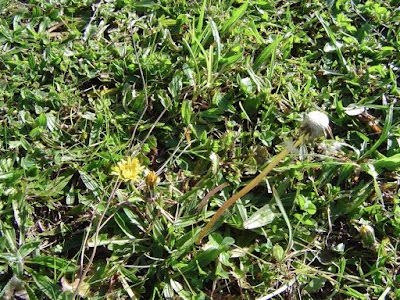
Dandelion (taraxacum)


We have loads of sheep sorrel in our garden. I cursed it until I tried eating the leaves. Now it's a best friend. Great in salads or soup. Normally grows in the garden where the soil is a tad acid.

Sheep sorrel (rumex)


Often feared as they are confused with deadly nightshade, but this black nightshade is very good eating. Cook leaves as a vegetable. Berries are good raw or cooked.

Black nightshade (solanum nigrim)


Mainly used as a medicinal plant although groundsel can be eaten too. Leaves cooked as a vegetable. The young leaves have been used in salad, though inadvisable since the plant is a cumulative toxin. It is often used as a poultice and is said to be useful in treating sickness of the stomach, whilst a weak infusion is used as a simple and easy purgative. NB I fried some falafel and added some groundsel leaf, stem and flower heads right at the end. I threw in a pinch of salt. Amazing result! In fact I preferred the groundsel quickly fried to the falafel.

Groundsel (senecio vulgaris)


Known as soursob, shamrock, wood sorrel or oxalis the leaves, flowers and roots can be added to salads. Oxalis contains Oxalic Acid, so should be eaten in moderation. The flowers are delicious.

Wood sorrel (oxalis)


This bitter wild lettuce is like cos. Eat young leaves raw, older leaves in soup/smoothies.

Wild lettuce (lactuca)


Wild roses or briars make ripe rosehips in the winter well after the petals have dropped. You can add ripe rosehips to stews and soups. Boil and strain to make a sauce. Boil to make a health giving tea. Rose hip tea is refreshing, pleasantly tart and contains vitamins A, B, C, E and K, pectin and organic acids. Besides battling colds, the nutrient rich tea boosts your health in other ways as well; it helps strengthen the body's resistance to infection, reinforces digestive function, combats all kinds of illness with fever, flushes out the kidneys and urinary tract and relieves mild rheumatic pain.

Wild rosehips (rosa)


The leaves of storksbill can be cooked as vegetable, but the entire plant is edible with a flavor similar to parsley if picked young.

Storksbill (erodium)


A primitive sage, lyreleaf sage or wild sage is not medicinal, but the fruit can be eaten. Apparently it makes a good incense.

Wild sage (salvia lyrata)


You can soak fumitory in cold water and wash face as a tonic and cleanser.

Fumitory (fumaria)


Young leaves of acanthus can be eaten. The flowers and fruits (cheeses) can be cooked as vegetable.
Acanthus (acantha)


Sow thistles are bitter but very nutritional. All aerial parts can be eaten. Young leaves in salad; cooked greens.

Sow thistle (sonchus)


Slightly slimy mallows are soothing medicinally. Roots can make a healthy tonic tea. Young leaves can be eaten raw; flowers and fruits (cheeses) can be cooked as vegetables.

Mallow (malva)


Wild fennel (apiaceae)


Flatweed (hypochaeris radicata)


Dock weed (rumex)


Hawksbeard (crepis)


Milkweed (silybum adans)


Wild radish (raphanus raphanistrum)

Plantains can be be used for salads and soups, but only very young leaves. Also have medicinal properties.
Plantain (plantago)

As you can see, I still have to complete my notes, and I will add to them over time, especially notes on application (cooking) of weeds.

And these are two that should never be eaten:

Hemlock (conium) – highly poisonous


Privet berries – poisonous
Foraging for winter meals

We have been eating a considerable amount of wild food that we have foraged close to home. I don't think there is a more pleasurable way to gather food than to slowly walk through the bush, arriving at the lake, throwing in a fishing line, collecting edible weeds and walking back through the town, scouring the ground, returning home with bags of greens and other gems.

Here's a dish we put together for tonight's dinner consisting of double boiled wild radish leaves blended with our potatoes, parsley, spring onion, eggs and garlic to make beautiful vegetarian patties which I served up with my green tomato chutney.


Apart from the salt, pepper and olive oil everything was either foraged or grown at home. The salt comes from desalination processes near the Murray River and the oil comes from an organic farm 10 minutes from here. The pepper is the only ingredient we don't know the origins of.

Monday, June 14, 2010

Garden and forest foraging

We've been extending our local winter food base by eating local edible weeds. A friend of ours, Alexis, takes an edible weeds and wild food workshop at our local neighbourhood centre. We took his course last weekend and have been harvesting food this week we never thought we'd be eating.

It is so exciting to find new food plants in abundance that have taken no effort to produce and are highly nutritious. This new food supply is so beautifully radical and is collected and foraged with so much pleasure. It's more 'do-nothing farming' than we imagined was possible.

The primitive is alive and well in us and the skills we've lost are profound, we're realising. Yes! We are reclaiming a public food commons. Uncapitalised food is go!

Here's a recipe for a Greek-style horta dish adapted from one of Alexis' recipes:

Wild horta served with potato and leek soup from our garden.

Rinse under running water: foraged hawksbeard, wild fennel seeds, chickweed, water cress, spear thistle, garden kale and flatweed and boil for 10 minutes. Rinse again under cold water and again boil in salty water for another 10 minutes. This removes much of the bitterness.


Rinse again and mould into a ball, squeezing out excess water. Cut across the ball into slices. Throw into a bowl and drizzle olive oil and lemon or lime. Crush some fresh garlic and throw into a hot dry pan. Heat for several minutes, while tossing.


Sprinkle wild fennel seeds and throw back into the bowl and serve warm as a side dish to the soup. We ended up throwing ours in with the soup. It was delicious, however I was so exhausted after our afternoon walk that I didn't think to take a final pic. We were happy to have yet another gorgeous meal 100% gathered within walking distance of our home.

Friday, May 21, 2010

Food Forest

We've been pretty busy of late designing a public food forest in Sydney.

Follow this community-garden-as-public-artwork here.

Thursday, April 15, 2010

A greenhouse built with reclaimed materials

Frost season is nearly upon us. So cladding the greenhouse has been a priority. However not wanting to rack up my hardware account or buy new materials, I've been patiently waiting for an alternative to arrive.


Then, a few days ago, Zeph and I were asked to demolish the front laserlight wall of a friend's workshop, as he needs to expand the space. We lucked in big time as Pete gave us the very useful and strong laserlight, along with the hardwood framing material that we'll use for another project. Thanks Pete! Today I was able to clad, or rather semi-clad, the greenhouse.


A few nights ago we thought we were going to have the first frost and I placed the laser light and some salvaged plastic from the building site next door over as much of the pumpkin patch as I could.


Just a few more weeks and we'll have a wonderful harvest, but a heavy frost now will end it all. So on cold, clear and still nights (like this one) I need to set the alarm and get up and hose down the frost before the sun burns the leaves and ends the months of growth for nothing.


After I finished installing the laser light I planted celery, pak choy, mini cauliflower, leek and cabbage underneath.

Wednesday, April 14, 2010

Co-op? Yes please

Cubans today consume about 80% organic food. The food is for everyone, not just for a wealthy few, and as a result diabetes rates are extremely low. Compare this to Australia where only about 4% of the food consumed is organic, often only afforded by the wealthy, in a country that has one of the highest rates of diabetes on the planet. Many of us in this wee community have for some time spoken about the desire for an organic food co-op with an emphasis on local produce. But action hasn't come... until now. Thanks to the energy of those pictured below (Sebastian Klein and Julian Blackhirst) we have a chance at realising this essential community asset.

A COMMUNITY push to form a wholefoods co-operative in Daylesford has gained momentum. A meeting will be held at the Daylesford Neighbourhood Centre on April 26 to gauge interest in the idea and to formulate a plan for getting the idea off the ground. Read on here.

Sunday, April 11, 2010

Preserves for the winter

Fruits we've preserved:

Pears
Plums
Apples
Grapes
Cucumbers
Nectarines
Cumquats
Rhubarb
Quince

Preserving method:

Jam
Jelly
Poach
Pickle
Stew

Other materials:

Salt
Sugar
Honey
Gleaned bottles
Rain water
Piped gas

Rear view

Tuesday, April 6, 2010

Under the soil where the gods will grow

Meg's been making more preserves. The cumquat marmalade she made is awesome. My quince jelly, however, didn't set despite using several green quince which apparently have more pectin in them than ripe ones. Still it tastes great and we will drizzle it over our morning porridge throughout the winter. We're not fans of 'gourmet' preserves, especially ones that use so much sugar and are therefore reliant upon monoculture cane farming. We're going to stick to stewing and poaching using local honey as a sweetener next year. To choose between big agribusiness or the local apiarist is a no brainer.


We had some friends come to stay over the weekend and to celebrate we picked our first-for-the-season pumpkin. It was a little under ripe, but still made an excellent soup. Come on Jack Frost, I know you're lurking, but please hold off a few more weeks!


Zeph and I worked up a sweat today turning the soil and breaking the clods in the north wall patch before planting 100 leek seedlings and 100 garlic cloves. We finished on dark just as the heavens opened and dumped a good fall. A gardener's wish come true.


As we turned and aerated the soil we found big juicy worms, so Zeph marched them down to the chooks to gobble. We're spoiling them more than usual at the moment as we're only getting one egg a day from five hens. The two new chooks are still settling and the pecking order has been interrupted, so it's no wonder they're at odds with their usual laying habits. Meg's been keen to make a zucchini cake, but until the girls start to lay again we can put that delicious ideal on hold.


Friday, April 2, 2010

Self-seeding, quick growing, sewing and storing

The zucchinis have been prolific giving us daily pickings for the past several weeks. Food that is this easy and quick to grow is a blessing. It's odd that something that is this much of a gift is scorned at this time of year. It's also odd that I have so much respect for this fruit when during my childhood I loathed them.

The eggplants are still providing and we have enjoyed making chips with them on the BBQ. With better soil next year we will be sure to increase the crop.

We have five small avocados that have self-seeded next to the self-seeded pumpkin patch. We'll see what the frost does to them. At least 5 pumpkins are ready now, but if we don't have a frost for a few more weeks we may have as many as 30 Queensland blues to store. We have an Avocado Bacon on order from the local nursery. They, along with the Hass, are supposed to be best in a cold climate, although we haven't had much luck with our Hass to date.

Meg's been making cumquat marmalade. Our store of food for the winter is growing with over 40 jars of preserved fruit – grown, gleaned or gifted. We had almost a year's supply of garlic stored from last year's crop and I have been preparing the new garlic bed for this year's planting. Everyone around here has been saying early April is the best time to plant garlic, and not later on the conventional shortest day of the year. The soil is still warm and they seem to kick on until the depth of winter if they're planted now. Garlic and leek will be planted in this patch and possibly some bare-rooted fruit and nut trees later in the winter.

Sunday, March 21, 2010

Eating local is eating in season

We've been eating small variations of practically the same meal for the past several weeks and are strangely enjoying the repetition. It feels increasingly right to be eating repetitively and in season like this. Silverbeet and zucchini have been in abundance, so they have constituted the major source of iron and vitamins. Then we have added basil, garlic, wild rocket, eggplant, potatoes, mint, oregano, tomatoes, cucumber, parsley and onions from the garden, eggs from our lovely girls, and a line-caught redfin or two from the nearby lake. What we then add to these meals are the products we are still reliant upon transporting in. There are usually two or three of the following ingredients with any of our evening meals: salt, pepper, butter, balsamic vinegar, brown rice, sour dough rye bread, or pasta.

In order to keep going with relocalising our food into the colder months, the poly-houses also keep going up over the raised beds.


I also planted 200 more of our saved broad bean seeds on the lower side of the swale (near the pitchfork below). This is to improve the soil quality while providing a hardy winter crop.


Our chooks in chook heaven attending to our city neighbours' neglect of their 'investment' property all throughout the fire season. When non-attendance is a blessing in disguise our chooks will be there to capitalise.

Monday, March 15, 2010

Frugality reality

Preparing for the colder months I started work on a new hothouse today. If we can keep the soil warm and the frost off the leaves our vegies will keep growing through the winter. I sharpened the tips of eight vertical garden stakes and fitted some leftover polypipe over them to make four arches. I then went through the wood pile looking for any length of 4.8m timber and found a piece of decking board, which I ripped into four individual pieces. I then attached the quartered lengths horizontally with tek screws, which bit into the polypipe really tightly. I asked the builders next door if I could have the clear plastic sheets they have lying about to cover material as it arrives. The answer was "shortly". Cool. I'll wait. The frosts are still a few weeks off.

I thought I'd also include my bike in this shot and show off the new crate that I fixed to it yesterday. I got the crate at the local markets for a few dollars. The hothouse so far hasn't cost us anything as the materials have been reclaimed from here and there over the years. Like the cellar I'm building for next-to-nix, we're really trying to make this transition with as little capital as possible. Although the main house, with double-glazed windows and solar panels was a major capital outlay, something we often question especially at a time of interest rate rises. Eeeeck!

Friday, March 5, 2010

Sowing and picking

We've had rain on and off today, which has come at a time just after I had added horse manure to the north bank garden and turned it over. It's also a few days after the full moon, so what better time to throw around some tree kale seeds and plant some broad beans, collected and dried from spring last year.

I then picked tonight's dinner veggies in the rain, which we'll have with brown rice and a light smatter of tamari.

To get decent rain in Autumn is a rare and welcome pleasure. Happy birthday Zephy.